Avoiding the IRS scandal the French way

May 19, 2013 § Leave a Comment

In France, contributions to churches and charities are treated just  contributions to political parties:  taxpayers get a 66 percent CREDIT for contributions up to 20 percent of income.  (Mighty generous.)  My old French major in college finally comes in handy, if I’m reading this right.

OK, the IRS scandal arises from treating political and charitable ENTITIES differently, « Read the rest of this entry »

Taxation, Destruction, and Discouragement: “North Carolina Tax Fairness Act”

May 17, 2013 § Leave a Comment

The power to tax is the power to destroy, or at least discourage.   As an advocate of higher, indexed taxes on alcohol, I don’t get North Carolina Senate President Pro Tempore Phil Berger’s “North Carolina Tax Fairness Act” proposal to impose sales or services taxes on prescription drugs and doctors’ fees.

Some of the Locke Foundation group would tax alcohol like milk, and tax doctors like tattoo artists.  Seriously.  Look at  Roy Cordato, Sales taxes and free choices, (May 25, 2010), http://www.newsobserver.com/2010/05/25/v-print/498695/sales-taxes-and-free-choices.html. 

I understand that folks distrust government, and I don’t blame them.  Distrusting government was at the top of the Founders’ agenda.  And once government starts picking winners and losers, it can get carried away.  But to insist on neutrality — to oppose having government make any distinctions — is to throw out the baby with the bath water.  Taxing medicine and doctors’ visits takes the principle of neutrality to an extreme.  I don’t think they’ll make that happen.

A secret plan to change our taxes — North Carolina Tax Fairness Act

May 13, 2013 § Leave a Comment

North Carolina Senate President Pro Tempore Phil Berger floated a notional “North Carolina Tax Fairness Act” last week.  Its provisions are unclear.  It would impose sales taxes on prescription drugs and even reportedly services taxes on doctor’s fees, but it remains a mystery.  I  tried to get the specifics last week via phone and email (http://nctaxcut.com/q-and-a/), but have received no reply.  If you find the plan, I’d appreciate knowing about it:   po@newrevenue.org.


NC Bar Presentation May 9, 2013: Marijuana Revenue

May 9, 2013 § Leave a Comment

Oglesby slides final for NCBA May 9, 2013 sent in:  A big file, with lots of images.

Orwellian Doublespeak from multinationals

May 3, 2013 § Leave a Comment

“The Home Court Advantage” is the label U.S.-based multinationals associated with the Business Roundtable want to apply to their territorial tax proposal.  The problem is that the territoriality they propose gives tax preference to their foreign investments. That’s how territoriality works:  we would tax their American income and not tax their foreign income.  Yes, they would give home investments a disadvantage while wrapping themselves in the flag.

What’s their defense for twisting words this way?  « Read the rest of this entry »

How did the Roth IRA get its name?

May 2, 2013 § Leave a Comment

 The easy answer is this:  “The Roth IRA is named after Senator William Roth, chairman of the Senate Finance Committee and an advocate of Individual Retirement Arrangements.”

But Senator Roth did not name his plan to allow current taxation and future deferral after himself.  That would have been bad form by any standard.  When he first introduced his plan, at some point between 1988 and 1990 inclusive, he called it the IRA PLUS.  Since the plan deferred revenue losses into later “out” years, my boss Senator Bentsen, opposing the plan, said PLUS stood for “Pay Later Uncle Sam.”  (That was Tax Notes quote of the week.)

In 1997, when the plan was enacted, somehow (I wasn’t around DC then) it acquired the name Roth IRA.  Senator Roth had no doubt been pushing it hard for years.  But he was not so self-congratulatory (or naïve) to name it after himself ever.

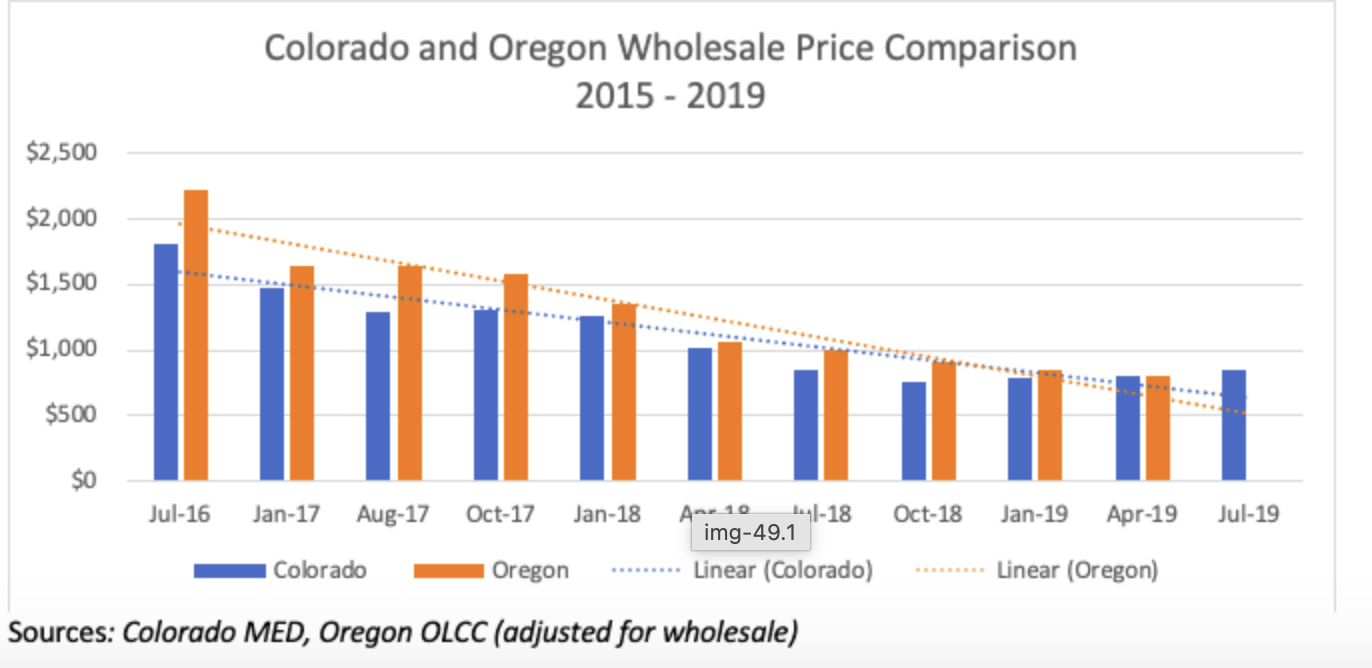
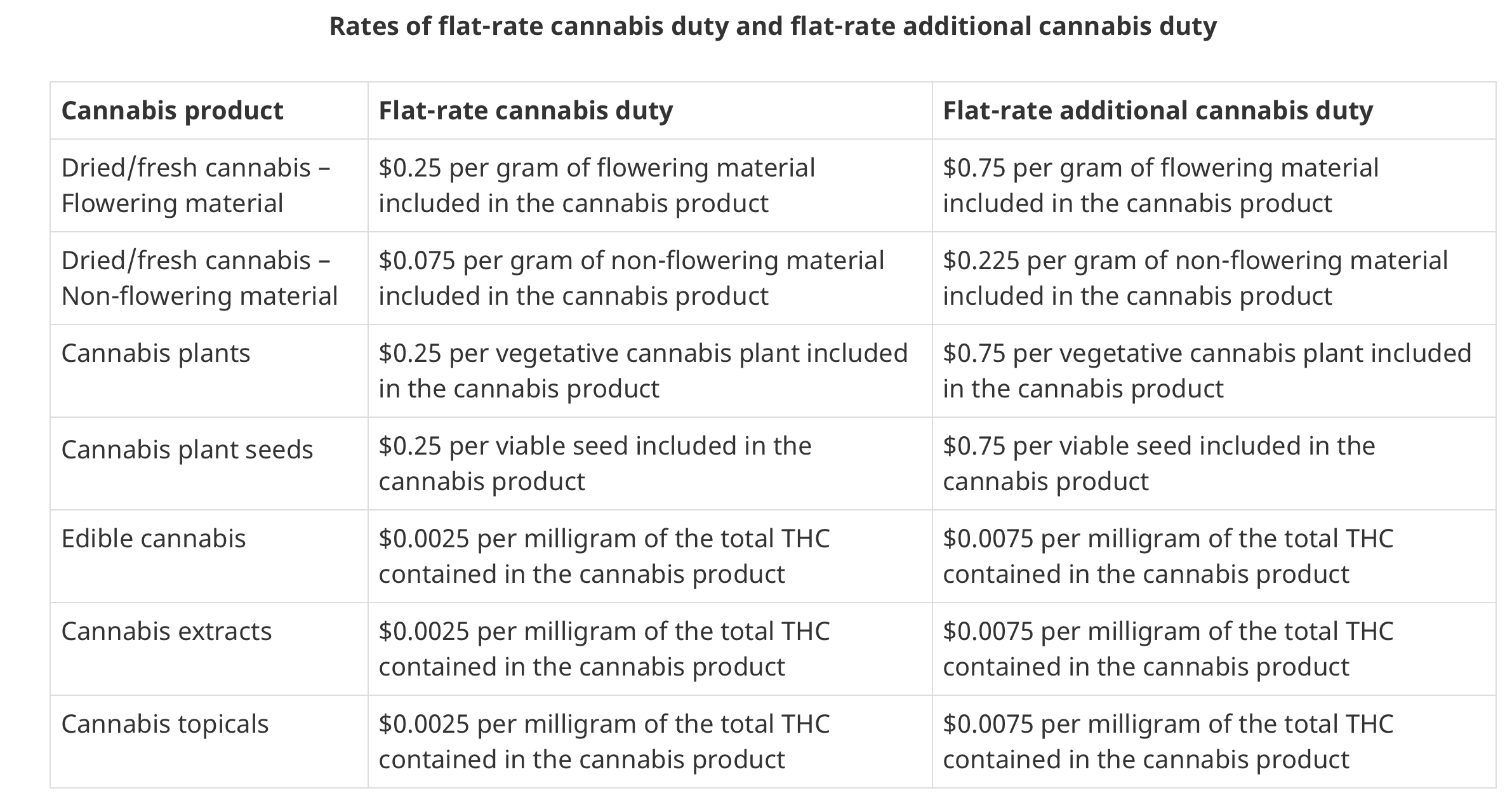
Bifurcating the tax base for marijuana: Weight and potency

May 1, 2013 § Leave a Comment

I’m getting closer to concluding that smokable marijuana should be taxed by weight, and edibles by potency of the processed material in them.  Asking around, I got this confirmation from someone who knows lots more than I do:

1.  Is it true that wax or BHO is fungible enough to tax by potency?  That is, will every sample test out the same for THC?
A:  Yes, it is fungible enough.  Although genetics vary in potency.
2.  Of all edibles produced, how much uses cannabis (1) in liquid or wax form as opposed to (2) granulated or ground solids?
A: Not sure if anyone knows.  But edibles that are best when made with extracted forms of THC.  If someone is putting in plant matter in their product, they won’t last long.

Center for Sensible Revenue

April 30, 2013 § Leave a Comment

I’ve formed a new North Carolina nonprofit, the Center for Sensible Revenue.  Some allies like the name better than Center for New Revenue.  Heck, I started out with the label New Taxes, so I’m moving toward the mainstream.  Still keeping http://www.newrevenue.org.


Maine bill gets indexing right

April 26, 2013 § Leave a Comment

Representative Diane Russell’s marijuana legalization bill in Maine would impose a $50 per ounce tax — and unlike so many others, includes indexing for inflation. « Read the rest of this entry »

Encouraging marijuana advertising: Colorado House Bill 13-1042

April 23, 2013 § Leave a Comment

Wherever marijuana is legal, it will be taxed.  Federal Code section 280E is broad, but it has the salutary effect of denying tax deductions for advertising.  (Whatever your view of legalization, public policy ought to discourage advertising for marijuana as it does for lotteries, alcohol, and tobacco.)  Colorado income tax law tracks federal law, so Colorado ganjapreneurs can’t deduct advertising expenses on their state returns, either. So far.  A bill in the Colorado House would change that. « Read the rest of this entry »

Tax marijuana: raw by weight, processed by potency?

April 23, 2013 § Leave a Comment

There are two kinds of commercial marijuana:  raw, and processed.  Processed is more powerful.  We can tax the raw stuff like beer, and the processed stuff like liquor.

That is, the base of a marijuana tax would be weight for raw — smokable product; and potency for brownies, tinctures, and everything else – potency by THC content, maybe with a CBD factor – and maybe further refinements as we learn more.

A pure percentage tax like ALL MARIJUANA TAXES SO FAR makes me nervous.  The reason is that NO OTHER “SIN” TAX works off pure percentage of price so far as I know.  « Read the rest of this entry »

Treaties, Tax, and Marijuana

April 22, 2013 § Leave a Comment

Executive Summary:  We override treaties ALL THE TIME.

Some folks point to old U.S. commitments to ban marijuana in a series of multilateral treaties as a show-stopper for marijuana legalization.  The United States made such a commitment in the Single Convention on Narcotic Drugs, https://www.unodc.org/pdf/convention_1961_en.pdf,  fifty-some years ago, they note, so they say we can’t change our rules.  Our only listed option is this:  “If UN antidrug treaties are construed as prohibiting federal legalization, they should be amended to eliminate provisions that produce such a reading.”  See, e.g., Steven B. Duke, “The Future of Marijuana in the United States,” http://law.uoregon.edu/org/olr/volumes/91/2/documents/Duke.pdf.

Amending a treaty with scores of signatories is impractical to the point of impossibility.  Are we stuck?

No.  We can, we repeatedly and deliberately do, and we should change our internal laws in the face of conflicting treaty obligations.  (We override the treaty by statute;  some prefer the terms “breach” or “violate,” but “override” is the technical tax term.) « Read the rest of this entry »

Marijuana Revenue — “High Tax States” — Oregon L. Rev. Article by Caulkins, Hawken, Kilmer, Kleiman et al.

April 19, 2013 § Leave a Comment

This just came out:  http://law.uoregon.edu/org/olr/volumes/91/2/documents/Caulkins.pdf.  It looks thoughtful and thorough.

Eight States, three criteria: The best chance to control marijuana

April 19, 2013 § Leave a Comment

The most fertile ground for sensible legalization is in the handful of states that don’t have medical marijuana, voter initiative, or private liquor stores.

1.  No legal medical marijuana.  Ongoing, permanent special rules for medical use make no sense under full legalization.  But medical use is a box canyon, as they say out West – you can get in, but you can’t get out.  Even now, « Read the rest of this entry »

280E Is Working: Brookings

April 15, 2013 § Leave a Comment

Internal Revenue Code section 280E, denying deductions for marijuana businesses other than cost of goods sold, is working.  Not only does it pinch businesses, it does so in a fortuitous way.

Section 280E is arguably working better than a flat, untargeted excise tax like our taxes on alcohol and tobacco:  The public has an interest in not promoting marijuana consumption, and section 280E it makes all advertising and marketing expenses « Read the rest of this entry »

Sin Tax-and-Regulate or State Monopoly? NC bill would tighten.

April 13, 2013 § Leave a Comment

To control and derive revenue from recreational substances, the public faces a choice.  For liquor, some 17 states choose monopoly over taxed, regulated private sales.  It’s awfully hard to switch from private sales to monopoly, but a House Bill 782 in North Carolina would do just that for fortified malt beverages and fortified wine « Read the rest of this entry »

Indexing: The Obama Administration Gets It

April 11, 2013 § Leave a Comment

I have often deplored the failure to index weight- and potency-based excise taxes on alcohol, tobacco, and marijuana, so it’s heartening to see the Obama budget call for indexing of tobacco tax rates (as well as an increase).  There’s more of the same in the budget’s call for indexing of tax penalties.  I have high hopes.

Where Am I?

You are currently browsing the Uncategorized category at Newrevenue.org.

Follow

Get every new post delivered to your Inbox.