Allow flipping of THC licenses in NC?

What are the pros and cons of allowing cannabis licenses to be transferred for consideration? Does it matter how they were issued (lottery, on the merits, by auction)?  As we look at THC licensing in North Carolina, what should we think?

From Gemini A.I.:

Allowing the transfer of cannabis licenses for “consideration” (money or value) is a debated policy point in every state that legalizes. While it encourages investment and market fluidity, it also risks turning public licenses into speculative commodities.

Continue reading “Allow flipping of THC licenses in NC?”

Virginia’s weak weed tax plan  

The flat eight percent tax in Virginia’s cannabis legalization proposal is primitive and weak.  The cannabis industry must be delighted.    

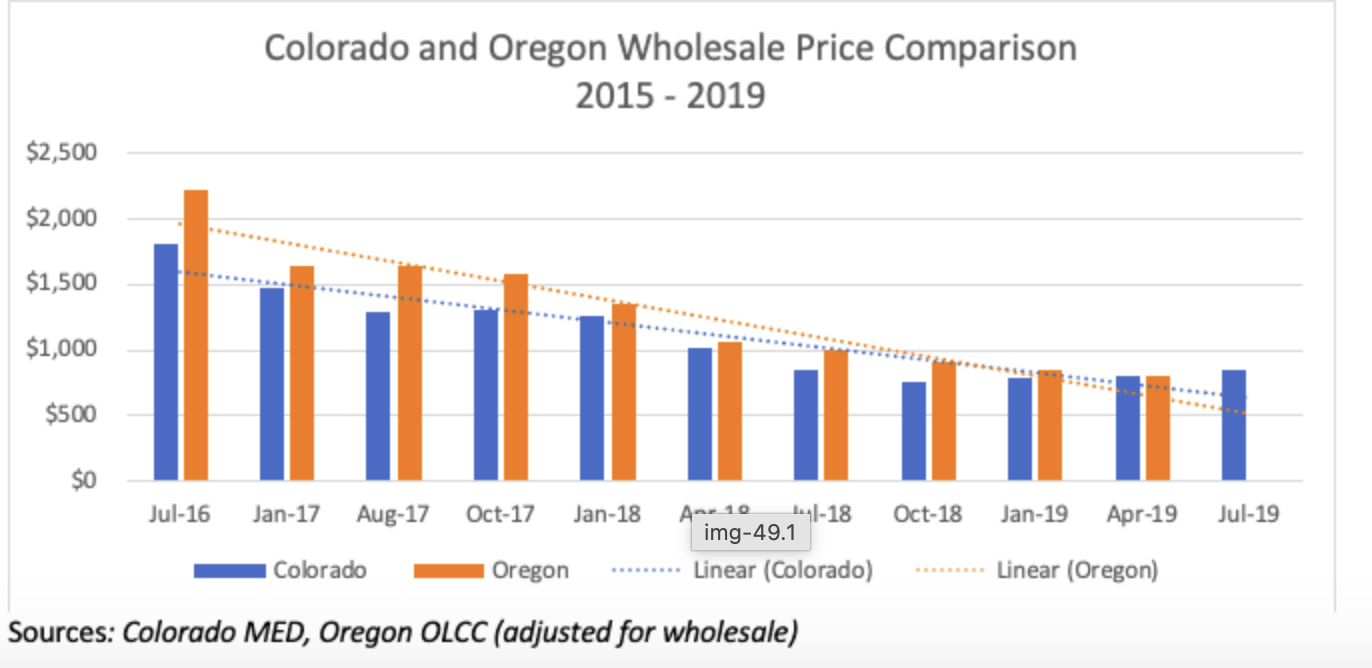
Problem:  Under the Virginia proposal, when the price is $200 an ounce, the state gets $16; when the price is $100 an ounce, the state gets $8.   But taxes need to go up over time.  Think tanks left (ITEP) and right (Tax Foundation) agree.  Pre-tax prices will be high at first, then they’ll crash.  (In every state, the market matures, and industry gets more efficient.)  

Let taxes go up:  The after-tax price is what matters in battling the black market. 

Weak solution:  New Mexico ratchets up its 12 percent price tax to 18 percent by 2030, and the leading Congressional legalization bill ratchet ups from 5 percent to 8 percent.

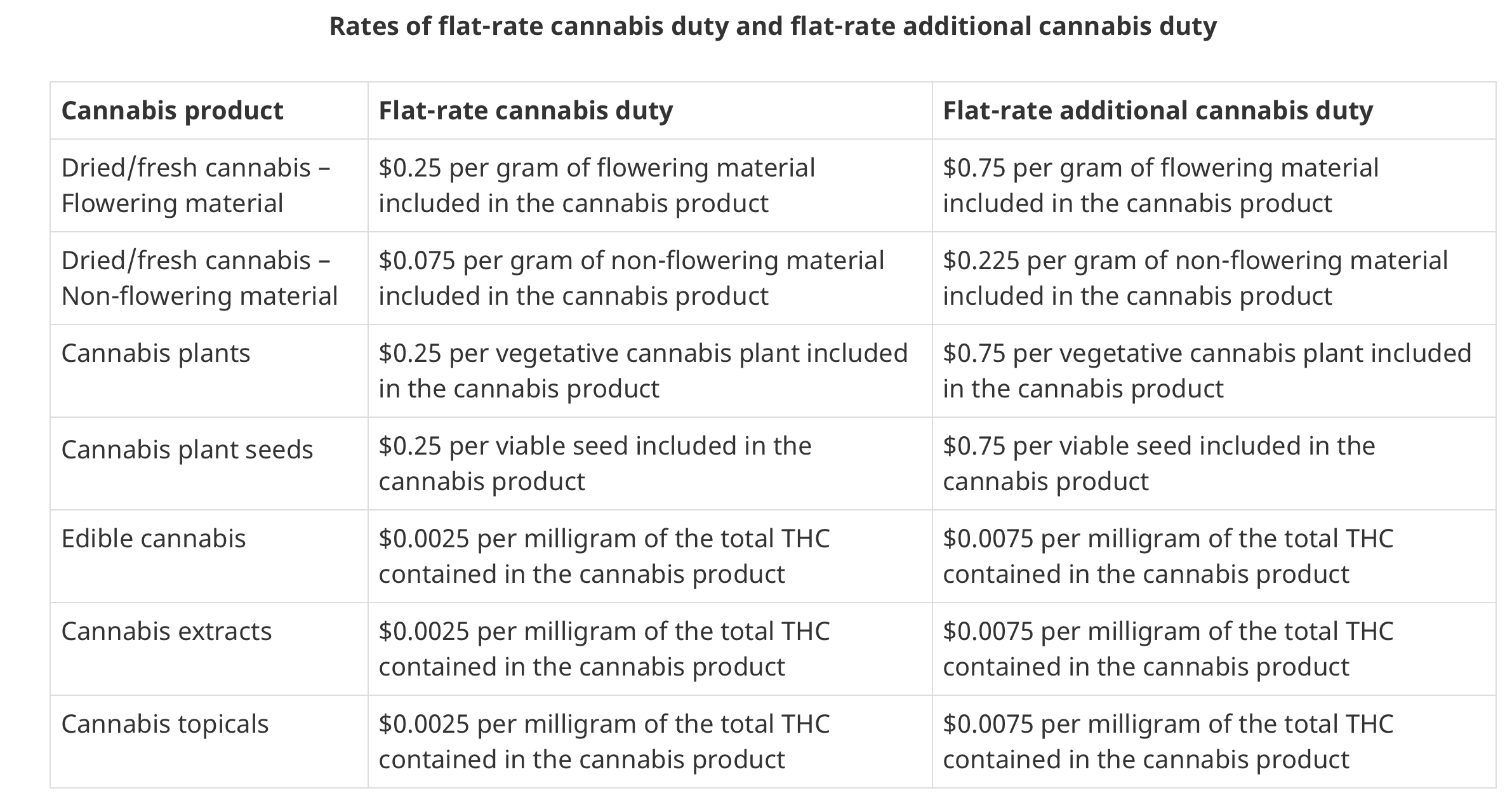
Strong solution:  Tax by grams of THC, the intoxicating molecule.  That’s state of the art, and what Canada and Connecticut do.  Then when prices collapse, the tax doesn’t collapse, too.

+++

Taxes are the caboose on the train of legalization, and they don’t get much attention.  

Licensing and Revenue: For the Market Structure Subcommittee of North Carolina Cannabis Advisory Council 

Question #3 of our seven “Policy Questions” is about “how the state issues licenses (e.g., through a lottery or competitive application process).”

Reasonable minds can differ.  Here’s some speculation.  

There are trade-offs.  One factor among very many is how licensing affects timing and amount of revenue needed to regulate the market.  (Maybe revenue is the caboose on the train of regulation, and cash flow is the taillight on the caboose, but you have to start somewhere.)

Cannabis can bring in government revenue to pay for the regulation that legalization entails– but unluckily, not at first.  So the market starts off chaotically if appropriators and agencies don’t pre-fund cannabis regulation adequately somehow.  Bad for folks in the market.  Bad for the public.  

No answers, but here are some sticks to throw on the fire – options for licensing – ranked according to earliness of cash flow.  But see three undesirable Downsides to this approach at the end. 

Options

1.     Application fees for limited licenses 

Continue reading “Licensing and Revenue: For the Market Structure Subcommittee of North Carolina Cannabis Advisory Council “

North Carolina Cannabis Advisory Council questions

MARKET STRUCTURE SUBCOMITTEE

Policy Questions

  • Do you recommend a vertically integrated model (i.e., a single company controlling the process from seed to sale)? If so, do you have recommendations on what size or level?
  • Do you recommend the state includes existing CBD and hemp retail entities in this new regulation model?
  • Do you have any recommendations on how the state issue licenses (i.e., through a lottery or competitive application process)?
  • Do you recommend the state limits the number of licenses available?
  • Should there be a residency requirement for licensees?
  • Should there be a capital requirement for licensees?
  • Do you recommend any social equity provisions, such as license prioritization, fee waivers, or business support programs?

Farm Bill THC Drugs and Taxes

Pending Congressional restriction of Farm Bill Hemp THC Drugs will tax them.   Proposals before Congress would classify these drugs as “marijuana,” and put them into Schedule I of the Controlled Substances Act, at least for now.  All Schedule I substances are subject to the 280E selling expense tax.  

Will the Joint Committee on Taxation score this revenue gain?

Must this kind of back door revenue raising bill originate in the House?

Does this legislation violate Grover Norquist’s No Tax Pledge — and set up primaries for the bill’s supporters? Grover famously tolerates “marijuana” taxes, since they involve a liberating move from prohibition to taxed sales.  But cracking down on Farm Bill Drugs means moving from a free market to regulation and from untaxed sales to taxed sales. Is there some exception to the No Tax Pledge for “loophole closers”? Lots of tax increases that need to happen are loophole closers.

Now I suspect that the 2018 Farm Bill “loophole” that carved hemp drugs out of taxed “marijuana” was not scored as a revenue loser.  But supposedly no one knew that that bill was legalizing intoxicants.

+++

Schedule III and tax scoring, from 2015:  

Farm Bill Drugs:

https://www.marijuanamoment.net/congressional-researchers-detail-divergent-opinions-on-hemp-as-lawmakers-debate-thc-ban/

https://www.kslaw.com/news-and-insights/congressional-crack-down-on-hemp-loophole-significant-changes-loom-for-hemp-industry

Hemp drugs will not be prohibited in NC — or will they?

“With hemp THC drugs wide open 24/7 and unregulated in North Carolina now, I see no chance that they will be fully prohibited.  So I think the only hope for North Carolina is to regulate them.” — I wrote that in September, but now in November that Congress is treating hemp like marijuana, I’m not so sure. Here’s what I thought back then:

Continue reading “Hemp drugs will not be prohibited in NC — or will they?”

Schedule III for only medical cannabis?

There’s speculation that the Trump Administration might reschedule cannabis into Schedule II rather than the predicted Schedule III.  That sounds doubtful.  To exhaust the possibilities, here’s another doubtful option — a little light-hearted speculation.

President Trump has said the following about cannabis—

“I’ve heard great things having to do with medical, and I’ve had bad things having to do with just about everything else. But medical, and, you know, for pain and various things.”

What if he wanted rescheduling for only medical cannabis into Schedule III, while leaving adult-use in Schedule I? It sounds crazy, but anything can happen these days, and President Trump calls the shots.

Continue reading “Schedule III for only medical cannabis?”

New York repealed its THC tax

I’m as big a fan of a potency tax as you can find, so I’m sad to say that New York repealed its THC tax in 2024. https://mjbizdaily.com/most-new-york-marijuana-operators-save-big-without-potency-tax/  Legal sellers in New York were having so much trouble  competing with illicit sellers that they succeeded not only in reducing the tax burden but in changing the tax base from milligrams of THC to an ad valorem (percentage of price) tax. I think people in state government were desperate to give legal sellers any relief they asked for.

Still, Connecticut continues its THC tax, as does Canada.  Bravo.  Illinois’s weird little combination tax is still on the books. It taxes products more heavily if they cross the 35% THC line with a higher ad valorem rate. The intent was to tax flower at a lower rate than concentrates, which would have been doable, but they somehow landed on this bright line 35% threshold, which is not ideal technically.

How the NC hemp bill, HB328, bans CBD — This got fixed

After this post, the NC House stripped out the CBD ban and ended up with only age-gating at 21. The bill moves on to the Senate as of June 26, 2025.

Here’s the original post, for the record:

++++++

The primary intoxicant in marijuana or cannabis is THC.  CBD, meanwhile. is universally acknowledged to be non-intoxicating .

But the North Carolina Farm Bill Drug bill that passed the Senate and is heading for the House allows THC but bans CBD. That’s crazy!

A Legislator told me I’m missing something — so I may be wrong here. But I offered a reward on Twitter or X for an explanation of what I’m missing, with no takers.

Let’s take a CBD gummy with no THC of any kind.  I think it’s a “prohibited hemp-derived consumable product” under North Carolina House Bill 328.

Continue reading “How the NC hemp bill, HB328, bans CBD — This got fixed”

State marijuana monopoly and federal illegality

Sure, a state marijuana monopoly would be federally illegal.   I used to think it would be bulletproof as a practical matter, in light of Louisiana’s experiment.   But President Trump might pick on states that he disfavors, as he does with California localities and ICE. https://www.msn.com/en-us/news/politics/ar-AA1GMkuT

Louisiana’s two land grant state universities had a state monopoly to produce medical marijuana for years before private industry shoved them aside.  Here’s a photo from the HBCU, whose inclusion in legislation may have helped with social equity concerns:

https://www.subr.edu/news/southern-launch-thc-line-of-medical-marijuana-products

In a 2013 North Carolina poll, state marijuana sales beat private sales by 3-to-1.  The full poll with cross-tabs is at https://newrevenue.org/wp-content/uploads/2013/03/nc-marijuana-polling-march-2013.pdf.  Not only do monopolies work best for public health, avoid all kinds of litigation by disappointed license applicants, maximize public revenue, and allow nimble pricing (unburdened by inflexible taxes) to compete with the illicit market; as our Stanford friend Keith Humphreys says, in light of the poor track record of social equity licensing, “In general retail monopolies (that’s where the industry still produces the product; the state sells it) have a better record of hiring diverse employees than do private companies.”   

President Trump might leave state marijuana sales in Red-State New Hampshire alone, but he might pick on North Carolina, with our Democratic Governor. It’s about how much risk a state wants to face.

Kind words from a friend

“Pat Oglesby Appointed to Marijuana Legalization Commission

“The governor of NC, Josh Stein, has come out in favor of marijuana legalization and formed a commission, on which my co-teacher, Pat Oglesby, has been tapped to serve, to study the issue and make recommendations.

“This is an outstanding choice! Pat knows more about marijuana legalization, taxation, licensing, and related issues than anyone I know. We co-taught a course, Cannabis Legalization, at UVA Law that was a huge success, due to Pat’s knowledge and connections to industry experts, regulators, and researchers (and to our excellent students, of course).

“The official press release is here, which includes the full list of commission appointees.”

That’s from University of Virgina law Professor Kim Krawiec. https://www.thefacultylounge.org/2025/06/pat-oglesby-appointed-to-marijuana-legalization-commission.html. I hope I can be useful and live up to her expectations.